OPT Compliance & H-1B Transition Enforcement Increasing
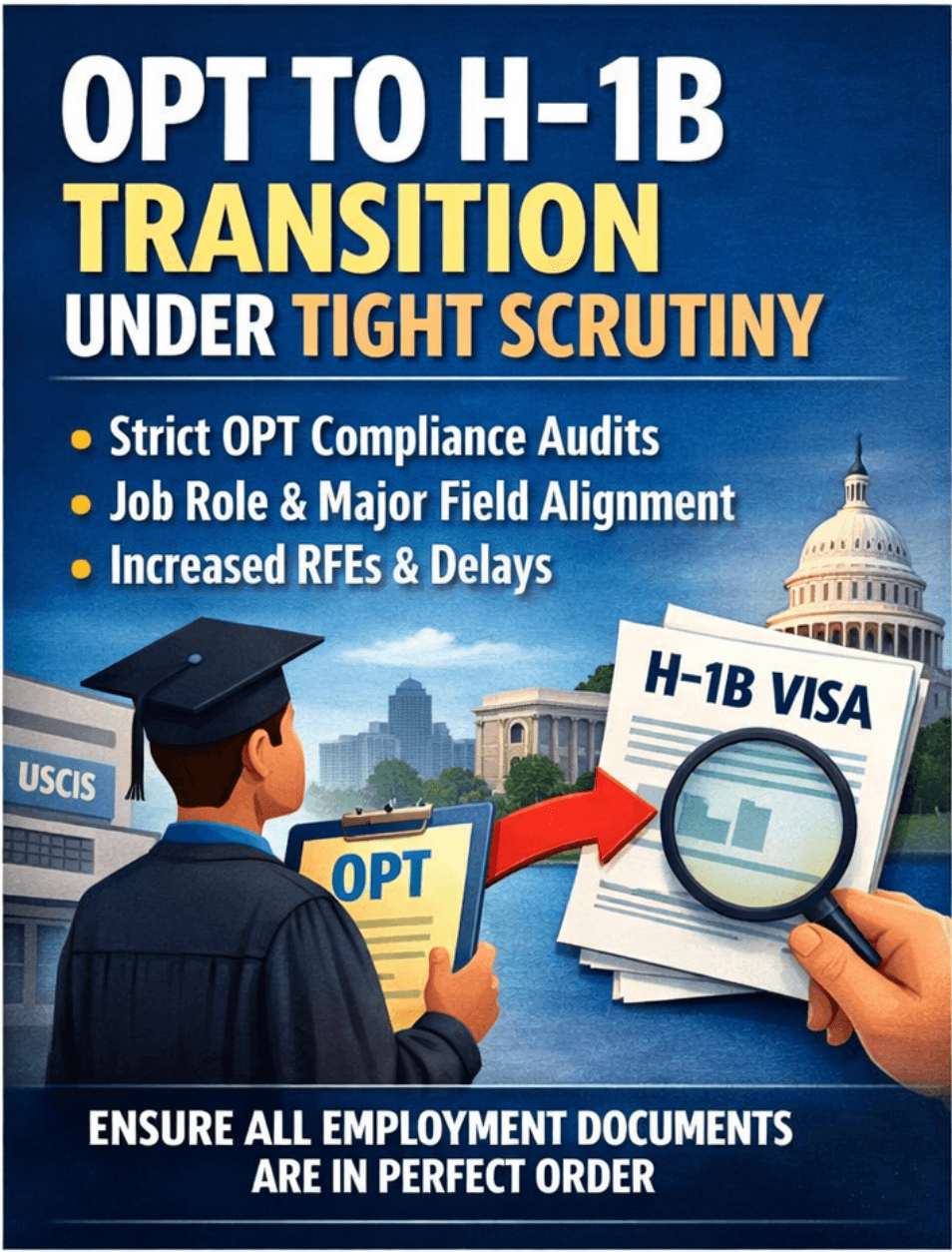
Even aside from proposed rule changes, U.S. immigration authorities have begun more thorough compliance reviews of OPT work arrangements, affecting the pathway to an H-1B visa.
This reflects a broader trend of stricter enforcement for employment-based immigration programs. Students on OPT must ensure full compliance to avoid status complications.
What's Changing?
The government is now re-checking whether OPT employment is properly related to each student's major field of study, whether employers are meeting training requirements (particularly under STEM OPT), and whether all Form I-983 training plans are executed correctly.
These compliance reviews have led to more Requests for Evidence (RFEs) and processing delays, sometimes jeopardizing student status if work does not fully comply with regulations.
Areas Under Increased Scrutiny
- 1
Degree-Job Relationship
USCIS is verifying that OPT employment is directly related to the student's major field of study. Generic job titles or vague job descriptions may trigger RFEs.
- 2
STEM OPT Training Requirements
Employers must meet specific training plan requirements under STEM OPT. Authorities are checking whether training plans are being followed in practice.
- 3
Form I-983 Accuracy
Training plans must be detailed, accurate, and actually implemented. Boilerplate or generic I-983 forms are being flagged for review.
- 4
Employer Compliance
USCIS is verifying that employers are legitimate, financially stable, and actually providing the training and supervision described in OPT applications.
Impact on OPT → H-1B Transition
Strong compliance documentation no longer protects against audits. Students must actively ensure that every OPT employment detail aligns with USCIS expectations.
Failure to do so can complicate change-of-status requests and future H-1B petitions. Even minor discrepancies in OPT employment history can trigger RFEs or denials during H-1B processing.
OPT Compliance Checklist
Do This
- ✓Ensure job duties directly relate to your degree
- ✓Keep detailed records of training activities
- ✓Update Form I-983 every 6 months (STEM OPT)
- ✓Maintain pay stubs and employment verification
- ✓Report any job changes to DSO within 10 days
- ✓Keep unemployment days under 90 days (total)
Avoid This
- ✗Generic job titles unrelated to your degree
- ✗Boilerplate or copy-pasted I-983 forms
- ✗Working for unverified or shell companies
- ✗Failing to report job changes or unemployment
- ✗Inconsistent employment records or gaps
- ✗Missing or incomplete training documentation
What You Should Do Now
- 1
Review Your Current OPT Employment
Verify that your job duties, title, and training plan accurately reflect your degree and USCIS requirements. Document everything.
- 2
Update Your Form I-983 (STEM OPT)
If you're on STEM OPT, ensure your training plan is detailed, specific, and being actively followed. Update it every 6 months as required.
- 3
Consult an Immigration Attorney
If you're planning to transition to H-1B or have any compliance concerns, get professional advice before filing your petition.
- 4
Prepare for Potential RFEs
Keep comprehensive documentation of your employment, training, and degree relationship. Be ready to respond quickly to any USCIS requests.
- 5
Research H-1B Sponsors Early
Don't wait until the last minute. Use tools like h1btrends.com to identify reliable H-1B sponsors with strong approval rates.
Source
OPT to H-1B Route Gets Tougher — Why Work Status Is Being Rechecked (January 15, 2026)
Business Standard: OPT to H-1B route gets tougher — why US is rechecking student work status
Based on reported trends in OPT compliance enforcement. Always consult with your Designated School Official (DSO) and immigration attorney for case-specific guidance.
Find Reliable H-1B Sponsors
Research companies with strong H-1B approval rates and sponsorship history. Make your OPT → H-1B transition smoother with data-driven decisions.